

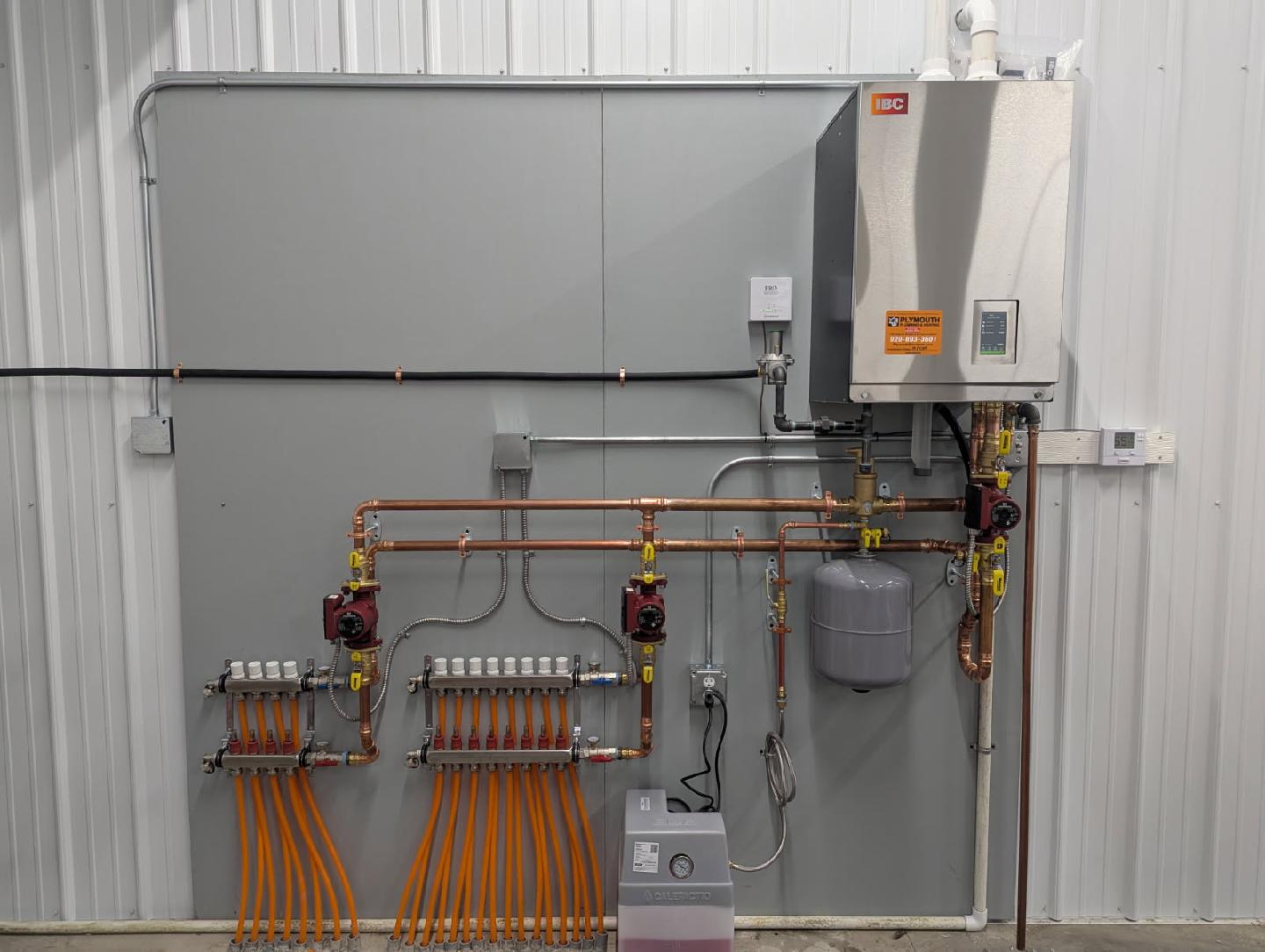
Boiler heat, you may think of very old heating method; but it has been upgraded and now a efficient contender to forced air system.
A boiler heating system (often called a hydronic system) is a central heating method that uses water or steam to move heat throughout a building.
Think of it as the building’s circulatory system: the boiler is the “heart” pumping warm fluid through “veins” (pipes) to deliver warmth to various rooms.
How the System Works
Unlike a furnace, which blows hot air through ducts, a boiler heats water and circulates it through a sealed loop.
Heating: Fuel (natural gas, oil, propane, or electricity) creates a flame or heat source inside the boiler.
Transfer: This heat is transferred to water inside a heat exchanger.
Distribution: A pump pushes the hot water through pipes to heat emitters in each room.
Emission: The heat is released into the room via radiators, baseboard units, or underfloor tubing.
Return: Once the water cools down, it flows back to the boiler to be reheated.
Common Types of Heat Emitters
Boilers don’t just “heat the air”; they heat the objects and people in the room. Here are the three most common ways they deliver that heat:
Radiators: Traditional cast-iron or modern steel units that sit against the wall.
Baseboard Heaters: Long, slim units installed along the floor that use “convective” heat.
Radiant Floor Heating: Flexible tubes installed beneath the floorboards, turning the entire floor into a gentle heat source.
A boiler system is considered more energy efficient then a furnace because water is a more effective conductor of heat transfer then air.


